
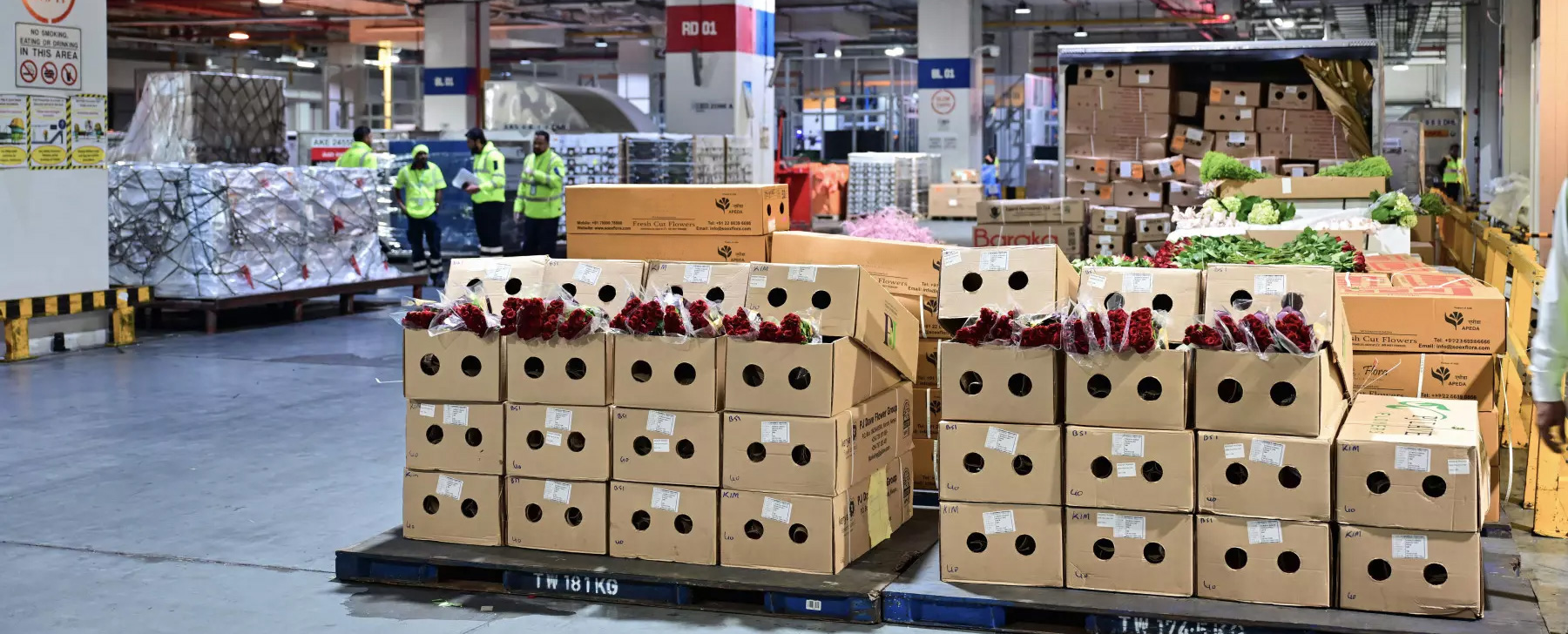
A Colorful Journey from Kenya to the World: Flawless Operations in Live Product Exports
The intercontinental journey of delicate products such as fresh flowers, roses, and saplings is a professional process that requires zero-error tolerance, high-level engineering, and perfect timing. It is natural to have concerns such as “Will the products be damaged during transit?” or “Will they maintain their freshness?”
However, as the world’s 3rd largest exporter of cut flowers, Kenya possesses a massive and reliable infrastructure that delivers millions of flowers to every corner of the globe daily, preserving their “day-one” freshness.
To Whom and How Does Kenya Export?
Kenya exports daily via regular cargo flights to more than 60 countries, primarily including the Netherlands (home to the world’s largest flower auction), the UK, Germany, France, Russia, the USA, Australia, and Middle Eastern countries. One out of every three roses sold in Europe is grown in Kenya.
This is made possible by the massive cold storage terminals located at Jomo Kenyatta International Airport (JKIA) in the capital, Nairobi, which are specifically built for perishable agricultural products.

Step-by-Step Flawless Operation: From Greenhouse to Aircraft
Every single product that reaches our customers passes through these strict stages defined by international standards:
1. Production in Ideal Climate and Precision Harvesting
- Production: High-altitude Kenyan greenhouses located on the Equator offer constant sunlight and ideal temperatures year-round. Products are grown in fully automated greenhouses with computer-controlled drip irrigation systems.
- Harvesting: Flowers and saplings are hand-cut by expert teams in the earliest hours of the morning (usually between 05:00 – 08:00) before the scorching effect of the sun begins. The cutting process is performed at special angles to preserve the plant’s water absorption capacity.
2. The Unbroken Cold Chain Begins
- Harvested products are moved to pre-cooling rooms located right next to the greenhouses within minutes. Here, the “field heat” of the product is rapidly reduced to between 2°C – 4°C. This process stops the plant’s aging process and allows it to enter a state of dormancy (sleep). This temperature never rises again until the products reach the buyer.
3. Quality Control, Grading, and Packaging
- Experts working in cold rooms grade the products with millimeter precision according to length, bud thickness, color, and health status.
- They are placed in crush-resistant boxes with special ventilation holes suitable for international transport. Special materials to maintain moisture during transit and solutions to ensure the plant continues to be nourished are added inside the boxes.
4. Transfer to the Airport via Refrigerated Vehicles
- Packaged products are loaded into refrigerated trucks with an internal temperature kept constant at 2°C and head directly to the specialized cargo terminals at the airport.
5. Phytosanitary (Plant Health) Inspections and Customs Clearance
- At the airport, products are inspected one last time by government agricultural inspectors. After confirming that they are free of any diseases, harmful insects, or fungi, an internationally valid Phytosanitary Certificate is issued. This document is a state guarantee that the product is healthy according to global standards.
6. Loading onto the Aircraft
- Even while being transferred to the aircraft on the airport tarmac, products are covered with special thermal blankets to prevent exposure to temperature changes.
- The internal cabin temperatures of cargo aircraft are also fixed between 2°C – 4°C. This temperature is continuously monitored by pilots and systems throughout the flight.
1. Saplings and Outdoor Landscape Plants
(For Landscape Architects, Nurseries, and Large-Scale Project Managers)
The greatest risk in sapling importation is damage to the plant’s root system or failure to adapt to a new climate. Kenya’s intense sun and open-air production facilities ensure that the trunk and root structures of the saplings are much more resilient (hardened).
- Soil-Free and Secure Transport: According to international quarantine rules, plants cannot be transported with soil. Our saplings are carefully removed from their production pots, their roots are washed, and they are wrapped with internationally approved sterile “Coco Peat” (coconut peat) or “Sphagnum Moss.”
- Root Moisture Protection: Specialized moisture-retaining gels and breathable wraps are used to prevent the roots from drying out during the journey.
- Phytosanitary and Nematode Testing: Prior to export, saplings undergo laboratory testing against root-knot nematodes and other soil-borne pests. You will encounter no surprises at customs.
2. Cactus and Succulent Groups
(For Collectors, Boutique Florists, and Indoor Wholesalers)
Unlike cut flowers, the logistics of cacti and succulents require “staying away from moisture.” Grown under direct natural sunlight in the semi-arid regions of Kenya, our cacti possess much more vibrant colors and a hardier texture compared to those grown in greenhouse environments.
- Bare-Root System: Watering is stopped days before the cacti are shipped. By ensuring the roots are completely dry, the risks of “root rot” and fungal issues during transit are eliminated.
- Special Shock-Absorbing Packaging: To prevent spines from damaging each other and to maintain the plant’s form, each cactus and succulent is individually wrapped in special soft tissue paper and secured in multi-layered cardboard boxes.
- CITES Certification: Some rare cactus and Euphorbia species under threat of extinction are subject to special permits in international trade. All required CITES (Convention on International Trade in Endangered Species of Wild Fauna and Flora) certificates are meticulously prepared on your behalf by our expert team.
3. Tropical Indoor (Foliage) Plants
(For Decoration Companies and Indoor Plant Importers) In the journey of broad-leaved tropical plants (Monstera, Philodendron, etc.), the greatest sensitivities are preventing leaf breakage and maintaining moisture balance.
- Temperature and Humidity Optimization: Unlike cut flowers, these plants are not exposed to extreme cold (2°C). In accordance with their tropical nature, they are transported at optimal temperatures such as 12°C – 15°C in aircraft cargo cabins.
- Leaf Protection Sleeves: Large and showy leaves are placed inside special protective sleeves or separator barriers to prevent bruising and browning caused by friction.
Official Documents and Certificates Provided During the Import Process
In the customs clearance process, which is the most critical stage of foreign trade, we provide all the necessary legal documents in full to ensure that your products enter your country smoothly and quickly. The standard document package provided to you with each shipment includes:
- Phytosanitary Certificate: The most fundamental document, issued following inspections by the Kenya Ministry of Agriculture (KEPHIS) before each shipment, proving that the products carry no diseases or pests.
- Certificate of Origin: A document officially certifying that the products were produced in Kenya, which may allow you to benefit from tax advantages in certain countries.
- Commercial Invoice: A detailed invoice containing all financial data required for customs declaration, such as product type, quantity, unit price, and total amount.
- Packing List: A critical list for tracking logistics processes, detailing the total number of boxes in the shipment, the weight and dimensions of each box, and the quantity of products inside.
- Air Waybill (AWB): An international transport document showing that the products have been delivered to the airline, including flight details and carriage terms.
- CITES Certificate (If Required): A legal trade permit in accordance with international conventions, required for the importation of endangered cactus or special succulent species.
Document Delivery and Support
To ensure your customs procedures proceed without delay, we send digital copies of all these documents to you (via email or WhatsApp) as soon as the aircraft departs. The original documents are sent along with the shipment (onboard the aircraft) to be delivered to your customs broker at the destination.
Note: Should you have a request for different documents specific to your country (plant passport, special declarations, etc.), our expert team will manage this process on your behalf and make the necessary preparations.